
In brief: choose an SEO specialist or agency based on whether they understand your business, explain their proposed work clearly, share verifiable examples, and agree on responsibilities and measurement. A first-place Google ranking is not a contractual promise, and a long client list alone does not prove that a proposal fits your website.
An SEO specialist may review your site, identify technical or content issues, set priorities, develop content, advise developers, or coordinate ongoing work. Scope, expertise, and service models vary. Before signing, find out exactly what you will receive and what your team will need to do.
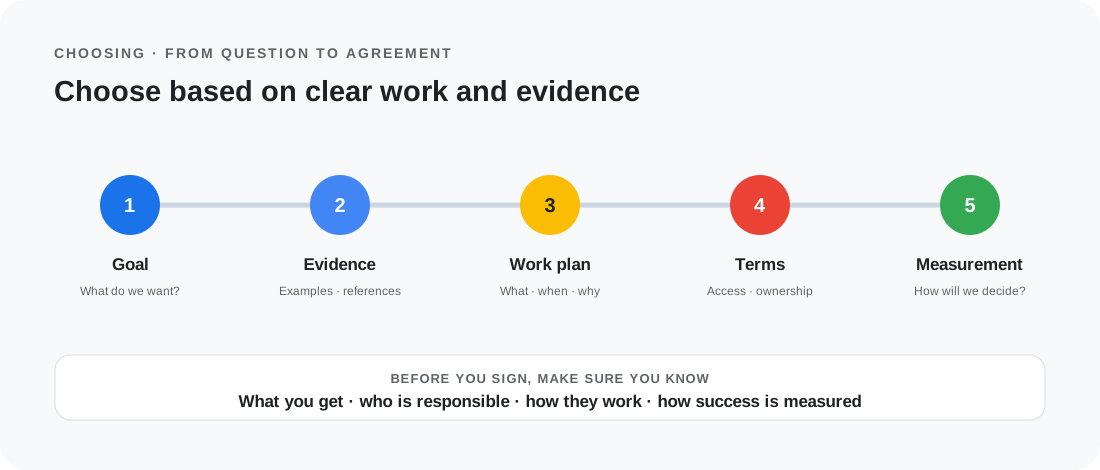
A good conversation goes both ways. You ask how the specialist works; the specialist asks about your customers, goals, offer, and team’s capacity.
Before the first call: define what you need
You do not need to know SEO terminology or the “best” keywords in advance. Write down the basics: which product or service you want to grow, in which market, who your customers are, and what action matters—a call, enquiry, order, or sign-up. Mention what you have already tried and any limits, such as budget, team time, platform, or seasonality.
This short brief will help you compare proposals against the same need instead of against polished package names.
Questions to ask an SEO specialist
1. What work would you prioritize first—and why?
Ask which problem the work addresses, what evidence supports it, and how it compares with other priorities. A useful answer connects a technical or content change to a specific page, user need, and business goal. Be cautious of generic “you need more links” claims or long checklists without priorities.
2. How will you decide which search topics matter to us?
The specialist should ask about customers’ language, service profitability, locations, competitors, and existing site data. Ask how topics will be chosen, which pages they will map to, and what evidence they will use—not just a tool’s search-volume estimate.
3. Who will actually work on our project?
Find out who will analyze the site, write or edit content, communicate with your team, and check changes. If an executive presents the proposal and another person will do the work, ask to meet the specialist who will be assigned. A small or large team does not guarantee quality; clear ownership and availability matter.
4. What examples demonstrate your experience?
Ask for relevant examples and an explanation of the starting point, what the team did, and how the outcome was measured. If client data is confidential, a redacted case or public change may work. Ask which results came from the specialist’s work and which depended on other marketing, website, or business changes. A screenshot of one ranking does not explain its cause or full impact.
5. How will we communicate, and what reporting will I receive?
Agree on meeting frequency, your point of contact, where tasks will be tracked, and how risks or delays will be raised. Reporting should cover work completed, organic impressions and clicks, important landing pages, and—where possible—business actions, not rankings alone. Ask the specialist to explain what decisions the report will help you make.
6. What access and changes will you need?
Ask whether read-only Search Console access is enough for an initial review, what other accounts or files are needed, and who will have edit permissions. Google advises granting read access, not write access, for an initial SEO audit. Agree that significant changes will be explained and approved, especially before a migration, URL restructuring, or major content rewrite.
7. What will you do if the forecast does not happen?
Ask what could change the plan, when priorities will be reviewed, and how the team will distinguish its work from seasonality, competitors, or other website changes. A professional answer acknowledges uncertainty and explains how the team will learn from data; it does not promise an exact position on a specific date.
What should a good specialist ask you?
If you are doing all the asking, invite the candidate to learn more about your business. SEO recommendations need to fit the real offer and the people it serves. The specialist should be interested in:
- Who your best customers are and what problems they have.
- Which services, products, or markets matter most right now.
- Where you serve customers, which languages you use, and what sets you apart.
- Which website action counts as success and how it is tracked.
- What SEO or website changes have already been made and who can implement new ones.
- Limits related to budget, team capacity, regulation, or seasonality.
If a candidate suggests a plan without knowing what you sell, who buys it, or what is wrong with the site, ask what their recommendations are based on.
How to assess an audit and proposal
An SEO audit should be a specific analysis, not simply an export of errors from an automated tool. Look for examples from your site, an explanation of why each issue matters, priorities, and an estimate of the work involved. Separate diagnosis from implementation: will the specialist only provide recommendations, prepare developer tasks, work with your team, and check the result?
| Check | A clear agreement should explain |
|---|---|
| Scope | Which pages, topics, languages, or technical templates are included—and what is excluded. |
| Deliverables | Which documents, changes, consultations, and reports you will receive, and when. |
| Responsibilities | Who approves content, deploys code, provides data, and checks the final changes. |
| Access and ownership | Which permissions are granted, who owns content and analytics accounts, and who controls them after the work ends. |
| Fees and cancellation | What is included, what costs extra, contract length, payment terms, and cancellation process. |
Before signing, check that the contract describes the work and acceptance process, rather than listing only target keyword positions. If a proposal promises an outcome, ask how it is defined and what happens if it is not reached. An SEO specialist can control the quality of their own work, but not every search system decision or market factor.
How to assess AI, AEO, and GEO claims
You may now see proposals for AI search optimization, “answer engine optimization” (AEO), or generative engine optimization (GEO). Ask what work the label actually means: improving content and sources, page structure, technical accessibility, or only buying a third-party monitoring report? How will the provider check whether the work helped?
Google cautions that third-party tools do not have access to its internal ranking data and cannot guarantee rankings or AI visibility. Treat claims of “Google-approved partners” or guaranteed citations in a particular AI answer with care. Ask for a clear method, evidence, limitations, and an explanation of which data comes from Search Console versus a model or tool estimate.
Warning signs
- A guaranteed number-one ranking or traffic percentage. Ask for the time period, query, and evidence behind it. Google says no one can guarantee the top ranking.
- Secret methods no one can explain. Your website and reputation are at stake; understand what will be done.
- Bulk automated link buying or unreviewed content. Ask about sources, method, and risks; compare the advice with official guidance.
- Pressure to act quickly and a vague contract. Do not rush to grant admin access or commit long-term before scope, fees, and cancellation terms are clear.
- An “SEO package” that asks nothing about your business. Ask why these tasks fit your customers, market, and website.
A simple way to compare candidates
After each call, mark every area as clear and supported, needs clarification, or unanswered. Compare candidates using the same criteria: understanding of your business, work plan, transparent examples, implementation ownership, access security, measurement, and communication. If something is unanswered, ask for more information instead of guessing from a marketing promise.
Frequently asked questions
Do I need a large agency?
Not necessarily. What matters is whether the team has the skills and time your project needs, who owns the work, and how communication will be handled. A solo specialist or larger agency can both be a fit; assess the actual proposal.
Should I choose based on where the agency ranks in Google?
Their visibility may be one data point, but it does not prove they will do the best work for your project. Assess relevant examples, process, references, and the team’s understanding of your market and goals.
Can an SEO specialist promise the top position?
No. A specialist can explain goals, work, risks, and measurement, but should not guarantee a specific ranking or date. Google advises caution with such promises.
What access should I grant for an initial audit?
Start with read-only access to the data needed. Google specifically recommends not granting write access to Search Console for an initial audit. Consider broader permissions later, once there is a clear reason and owner.
The takeaway
Choose a specialist who starts with your business, gives clear recommendations, can show verifiable examples, and speaks openly about limits and risks. Before signing, agree on specific work, ownership, access, reporting, and cancellation terms. If a promise sounds guaranteed, ask for evidence and a precise explanation.
Related guide: How Much Does SEO Cost? What Are You Really Paying For?
Sources and official guidance
- Google Search Central: Do you need an SEO?
- Google Search Central: evaluating third-party SEO services
- Google Search Central: optimizing for generative AI features
Reviewed October 2026. Recheck the scope, permissions, and official guidance before signing.
Back to the top ↑Next guide: Unique SEO Methodology: From Keywords to Measurable Results