
In brief: SEO cannot be priced meaningfully by counting keywords or promising a ranking. A proposal is valuable when it spells out the work, its scope, who will implement it, and how its impact on the business will be assessed. You might pay for an audit, a consultation, a defined project, or ongoing work. The important thing is knowing exactly what you are buying.
SEO is not a single button or a standalone article. One project may need a site review and a prioritized plan; another may need technical fixes, better service pages, a content plan, or coordination with developers. A useful proposal starts with your situation and goals, not a universal “SEO package.”
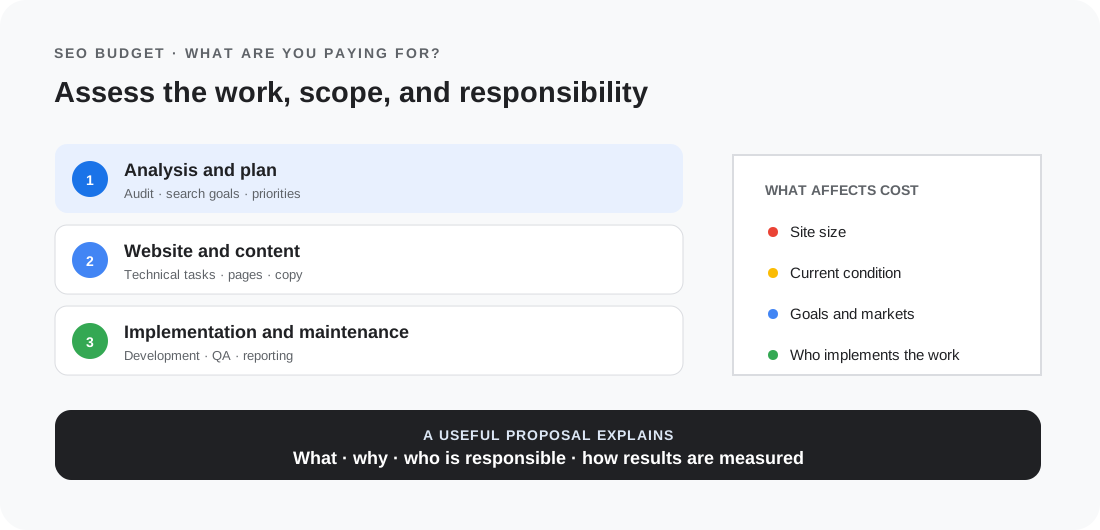
A good SEO proposal answers four questions: What will be done, why does it matter, who is responsible for implementation, and how will we assess whether it helped?
What are you actually paying for?
The fee usually reflects specialist time and expertise, analysis and tools, content or technical work, and coordination. Whether these are one line item or several depends on the agreement. Before comparing proposals, separate the following work:
| Work area | What it may include | What to clarify |
|---|---|---|
| Analysis and priorities | Reviewing the website, search queries, competitors, and technical condition; creating an action plan. | Will you receive a specific document with issues, evidence, priorities, and estimated work? |
| Content and pages | Reviewing existing pages, planning new content, expert writing, editing, or publishing. | Who provides facts, who writes and approves the content, and how many pages or hours are included? |
| Technical changes | Documenting technical blockers, preparing developer tasks, supervising changes, and checking them. | Is developer time included, or only recommendations? Who implements and verifies them? |
| Ongoing work | Refining priorities, making new changes, monitoring outcomes, consulting, and reporting. | Which tasks repeat each month, and what counts as extra work? |
Advertising spend is not the cost of SEO services. If you also plan to use Google Ads, ask for ad spend, campaign management, and SEO work to be listed separately. Check whether writing, development, translation, tools, or taxes are included. “Included” and “recommended as an extra” are different things.
What changes the scope of work?
- Website size and type. A local business site with a few pages and a shop with thousands of products, filters, and categories need different levels of analysis.
- Current condition. A well-structured website may need a few priority fixes; technical blockers, duplicate pages, or outdated architecture require diagnosis first.
- Markets and languages. Multiple regions, languages, or product lines add research, content adaptation, and quality checks.
- Team and implementation. The cost changes if a specialist only provides recommendations or also coordinates and checks the work with a writer and developer.
- Business outcome. Agree whether the goal is technical readiness, more qualified enquiries, sales, or better coverage of a topic. A list of rankings does not show the full business value.
Keyword count can help define the work, but it should not be the only way to price it. One page may answer several closely related searches, while different needs may call for separate pages. Ask why the proposed structure makes sense.
Common ways to pay for SEO
| Model | When it can fit | Check the agreement |
|---|---|---|
| One-off audit or consultation | You want to understand the situation, get priorities, or implement work yourself. | Audit scope, deliverable, discussion time, and whether a follow-up check is included. |
| Fixed-scope project | There is a defined outcome, such as a migration plan or optimizing a set of pages. | What is included, deadlines, client inputs, revision limits, and what counts as extra work. |
| Monthly engagement | You need ongoing prioritization, implementation, and review. | Monthly tasks, hours or deliverables, reporting, contract length, and cancellation terms. |
| Hourly consulting | Your team can do the work but needs an expert on specific questions. | Preparation, session length, whether notes are provided, and how extra time is billed. |
There is no single right model for every business. A one-off audit will not help if its recommendations are never implemented; a monthly fee is hard to justify if no one can explain what is being done. Match the arrangement to your team, resources, and current stage.
How to compare two SEO proposals
Compare the work plan, not just the final figure. Ask both providers to answer the same questions:
- What exactly will I receive? An audit, page list, content plan, implementation, report, or consultation?
- How much of the site is covered? Will the review include important templates, categories, products, languages, or only a few URLs?
- Who will implement changes? Will your team get clear tasks, or will the work be done and checked for you?
- How will results be assessed? Will the report cover impressions, clicks, relevant queries, and business actions, or rankings alone?
- What is excluded? Ask about development, writing, translation, paid tools, link work, taxes, and extra meetings.
- What access is needed? Share only what is necessary at first. Agree whether the provider needs read or edit access, and when it will be removed.
Google recommends asking about previous work, methods, timelines, and how success is measured, and requiring an explanation of proposed changes. For an initial audit, Search Console read-only access is usually enough; grant edit access only when there is a clear reason. Google’s guide to hiring an SEO is a useful starting point.
What about AI SEO and visibility in AI answers?
You may see “AI SEO,” AEO, or GEO labels in proposals. The label alone does not tell you what work will be done. Ask whether the provider will improve page content, structure, technical accessibility, expert information, or measurement. Agree on what report you will receive and what it can—and cannot—prove.
Google advises evaluating third-party SEO tools and service claims critically: they do not have access to Google’s internal ranking data and cannot guarantee results. Be careful about extra charges for vague “AI visibility” or promises that your content will be cited by a specific answer tool. Ask for work you can verify, and distinguish monitoring data from guarantees. Google’s guidance on third-party SEO services.
How to assess whether SEO spend makes sense
There is no single formula for SEO return, but start with a practical question: do you know what a valuable customer action is worth? Track qualified enquiries and sales, as well as organic clicks. Record a baseline, the dates of changes, and what was implemented; then compare similar periods. Seasonality, promotions, site changes, and competitors can all matter, so one metric is not enough.
Include your team’s time in the budget too: approvals, fact checking, development, and customer service. If a provider makes a plan but no one implements it, you cannot fairly judge the outcome by the service fee alone.
Claims to check carefully
- “We guarantee the top spot.” Google says no one can guarantee a specific first position or date.
- “We have a special relationship with Google.” Ask for concrete work and the official documentation behind recommendations.
- Vague monthly activity. If the proposal does not explain tasks, recommendations, or ownership, there is not enough information to sign yet.
- AI guarantees or inflated metrics. Ask how a metric is calculated, whether it comes from first-party data, and what decision it supports.
- Pressure to grant every access immediately. Understand why access is needed, use accounts you own, and agree when permissions will be removed.
Frequently asked questions
Is there a standard market rate for SEO?
There is no single universal rate. Cost depends on scope, website condition, markets, team, and who implements recommendations. This guide does not give a price range because figures without a defined market and service scope can be misleading.
Is the cheapest proposal a bad one?
Not necessarily. Compare what is included, what is not done, and how much work your team will need to provide. A lower fee may reflect a narrower scope, less implementation, or a different model—ask the provider to explain.
Can I do SEO myself?
Yes. Owners of small sites can do many foundational tasks: understand customer questions, create clear service pages, improve navigation, and use Search Console. Hire a specialist where you lack time, expertise, or technical ability.
Should I pay for SEO every month?
Only when there is ongoing work, clear monthly priorities, and useful reporting. If you need a one-time answer or review, a fixed-scope project or consultation may fit better.
The takeaway
Assess SEO fees by the work and responsibility involved, not by a flashy package or promised ranking. Ask for a specific plan, find out who implements it, separate service fees from advertising and extras, and agree on measurement. Then choose a proposal that fits your goals, team, and resources.
Next guide: How to Choose an SEO Specialist: Questions to Ask Before Signing
Sources and official guidance- Google Search Central: Do you need an SEO?
- Google Search Central: third-party SEO services and tools
- Google Search Central: technical requirements for Search
Reviewed October 2026. Check the scope, terms, and official guidance before signing.
Back to the top ↑SEO audit: what to check, what it costs and what to expect →